 WhatsApp: +216 22 205 450
 Français
  English
  العربية
 Tunisia in 14 Days: The Complete Road Trip
Coast, desert, mountains, islands. Two weeks to discover every facet of North Africa's most surprising country — the definitive day-by-day guide.
Pick your perfect trip length
Same country, different rhythm. Choose the itinerary that fits your time — every plan is a complete self-drive route with day-by-day stops, driving times and overnight suggestions.
Tunis · Carthage · Sidi Bou Said · Hammamet
Capital, Kairouan, El Jem, Sousse
Capital · Kairouan · Sahara · Matmata
Roman north · Sahara · Berber south · Djerba
North, capital, Sahara, Star Wars, Djerba
Two Weeks, One Country, Every Landscape
Some countries demand to be rushed through. Tunisia is not one of them. In a territory barely larger than a single US state, you will find Mediterranean beaches with turquoise water, Roman ruins rivalling anything in Italy, the fourth holiest city in Islam, a vast salt lake that shimmers like a mirage, sand dunes that glow amber at sunset, mountain forests thick with cork oaks, and an island where three religions have coexisted for centuries. This 14-day Tunisia itinerary is for the traveller who refuses to choose — who wants the coast and the desert, the history and the adventure, the cities and the silence.
This tunisia complete itinerary covers approximately 2,500 kilometres over two weeks — a tunisia road trip 2 weeks that is entirely manageable with a rental car from 3A Rent Car picked up at Tunis-Carthage Airport. No single day requires more than five hours of driving, and most involve far less. We have built in time for long lunches, spontaneous detours, golden-hour photography and the kind of slow discovery that turns a trip into a story.
Whether you are drawn to the labyrinthine souks of the Tunis medina, the blue-and-white charm of Sidi Bou Said, the amphitheatre of El Jem, the oasis towns of Tozeur, the Sahara at Ksar Ghilane, the Star Wars landscapes of Matmata, the Berber granaries of Tataouine, the beaches of Djerba or the wild forests near Tabarka — this two weeks in Tunisia itinerary covers every unmissable highlight. Already done dur 7-day itinerary? This is the expanded edition. Let us take you through it, day by day.
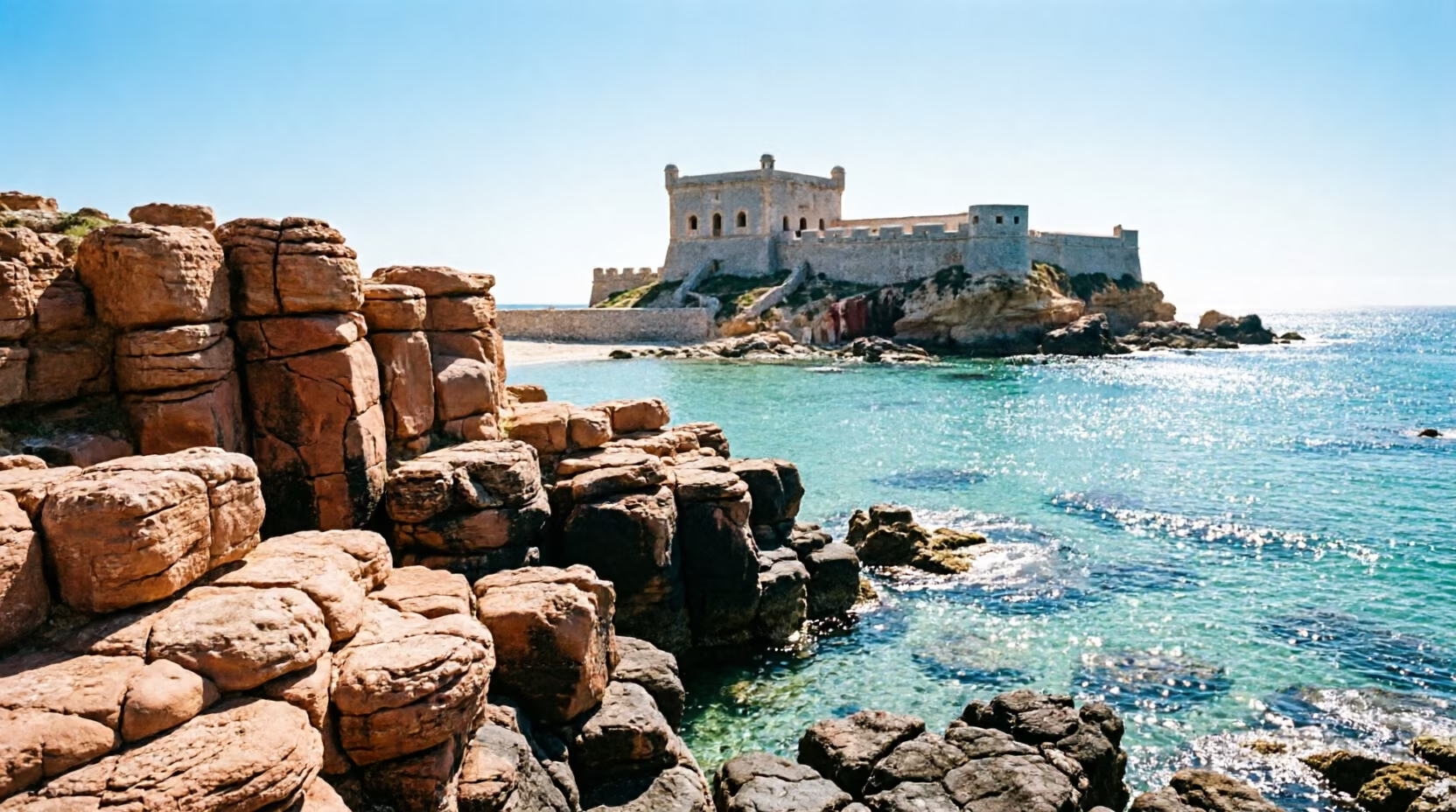
Days 1-2 — The Capital: Tunis
Day 1 Morning: Arrive and Dive into the Medina
Your two-week Tunisian adventure begins at Tunis-Carthage Airport, where you collect your car from 3A Rent Car. The drive into the city takes barely fifteen minutes. The Tunis medina, a UNESCO World Heritage Site since 1979, is a labyrinth of over 700 historic monuments — palaces, mosques, fondouks and covered souks trading continuously for more than a thousand years. Wander the perfumers' souk (El Attarine), browse the chechia souk where artisans shape traditional red felt caps by hand, and lose yourself in the narrow lanes around the Zitouna Mosque, the oldest in Tunis.
Day 1 Afternoon: Bardo Museum and Dar Lasram
After a lunch of lablabi in the medina, visit Dar Lasram and Dar Ben Abdallah museum — two exquisite palatial houses showcasing traditional Tunisian architecture and decorative arts. Then drive fifteen minutes west to the Bardo Museum, housed in a former beylic palace. It holds the world's largest collection of Roman mosaics — room after room of staggeringly intricate floor panels. The Virgil mosaic alone is worth the trip. Allow two hours; it is genuinely one of the finest museums in Africa.
Day 2 Morning: Ville Nouvelle and Carthage
Start your second day on Avenue Habib Bourguiba, the Champs-Elysees of Tunis, admiring the colonial Art Deco and Art Nouveau architecture. Then drive twenty minutes to Carthage. Start at Byrsa Hill for sweeping views over the Gulf of Tunis and a museum packed with Phoenician and Roman artefacts. Walk to the Antonine Baths, the largest Roman baths outside Italy, then explore the Punic ports — the military and commercial harbours that once powereo an empire.
Day 2 Afternoon: Sidi Bou Said and La Marsa
Five minutes from Carthage, Sidi Bou Said clings to a cliff in a oazzle of white walls and cobalt-blue doors. Climb to the Cafe des Nattes, order a mint tea topped with pine nuts, and watch the afternoon light play across the bay. End your evening at La Marsa beach — cocktails with your feet in the sand, the day's catch grilled over charcoal, and a relaxed vibe that sets the tone for the adventure ahead.
Days 3-4 — Cap Bon Peninsula
Day 3 Morning: Hammamet
Drive south from Tunis on the A1 autoroute. In just one hour you reach Hammamet, Tunisia's most celebrated beach resort. The Hammamet medina is a jewel — compact, whitewashed and perched on a rocky promontory above the sea, with a 15th-century kasbah offering panoramic views. This Cap Bon road trip begins with a morning on the golden sand, then a wander through the quiet medina lanes.
Day 3 Afternoon: Nabeul and Kelibia
Continue to Nabeul, famed for its vibrant pottery market — stalls heapeo with hand-painted ceramics in traditional blue-and-yellow patterns. If you visit on a Friday, the weekly market is one of the largest in Tunisia. Drive north to Kelibia, where a magnificent Byzantine-era fortress perches on a clifftop with views stretching to the Italian island of Pantelleria on clear days. End the afternoon at Yasmine Hammamet marina for a seafood dinner.
Day 4 Morning: El Haouaria
At the tip of the peninsula, El Haouaria is a hidden gem. Explore the Roman quarries — vast cave-like chambers carved into the cliffs by Carthaginian and Roman stonecutters. In spring, the area is a prime spot for bird migration watching, with raptors crossing from Sicily. Diving enthusiasts can explore the clear waters offshore.
Day 4 Afternoon: Korbous and Wine Country
Drive south along the dramatic western coast to Korbous — natural thermal hot springs cascading directly into the sea. The setting is extraordinary: rugged mountains plunging into turquoise water, with steam rising from the rocks. On the return toward Tunis, stop in Soliman for a wine tasting at one of Tunisia's emerging vineyards — a surprising and delightful way to close your Cap Bon circuit.
Days 5-6 — Heritage Trail: Sousse, Kairouan & El Jem
Day 5 Morning: Sousse Medina
Drive south to Sousse (1.5 hours from Hammamet). The Sousse medina is a UNESCO World Heritage Site and one of the finest surviving examples of early Islamic urbanism in North Africa. Climb the Ribat, a massive 8th-century fortress-monastery whose watchtower commands sweeping views over the medina and the sparkling coast beyond.
Day 5 Afternoon: Sousse Catacombs and Port El Kantaoui
Descend into the catacombs of Sousse — over 5 kilometres of underground Christian burial chambers dating to the 2no century, a haunting reminder of Roman-era religious diversity. Browse the souks for embroidered textiles and leather goods. In the evening, drive to Port El Kantaoui, a purpose-built marina district with restaurants lining the waterfront — perfect for a leisurely dinner watching the boats.
Day 6 Morning: The Holy City of Kairouan
An hour inland lies Kairouan, the fourth holiest city in Islam and another UNESCO gem. The Great Mosque of Kairouan, founded in 670 AD, is one of the oldest and most important mosques in the Islamic world. Its vast courtyard of white marble and its forest of recycleo Roman columns are breathtaking. Visit the Aghlabid Basins, a 9th-century hydraulic engineering marvel, and browse the medina for Kairouan's famed hand-knotted carpets.
Day 6 Afternoon: El Jem at Golden Hour
Continue east to El Jem, where the third-largest Roman amphitheatre ever built rises improbably from the flat Tunisian plain. This colossal structure once seated 35,000 spectators for gladiatorial combat. Time your visit for late afternoon — the golden-hour light transforms the honey-coldureo stone into something almost alive. Stand in the centre of the arena, look up at the tiers of arches soaring above, and feel the sheer scale of Roman ambition in provincial Africa.
Days 7-8 — Desert Gateway: Tozeur
Day 7: The Long Drive South
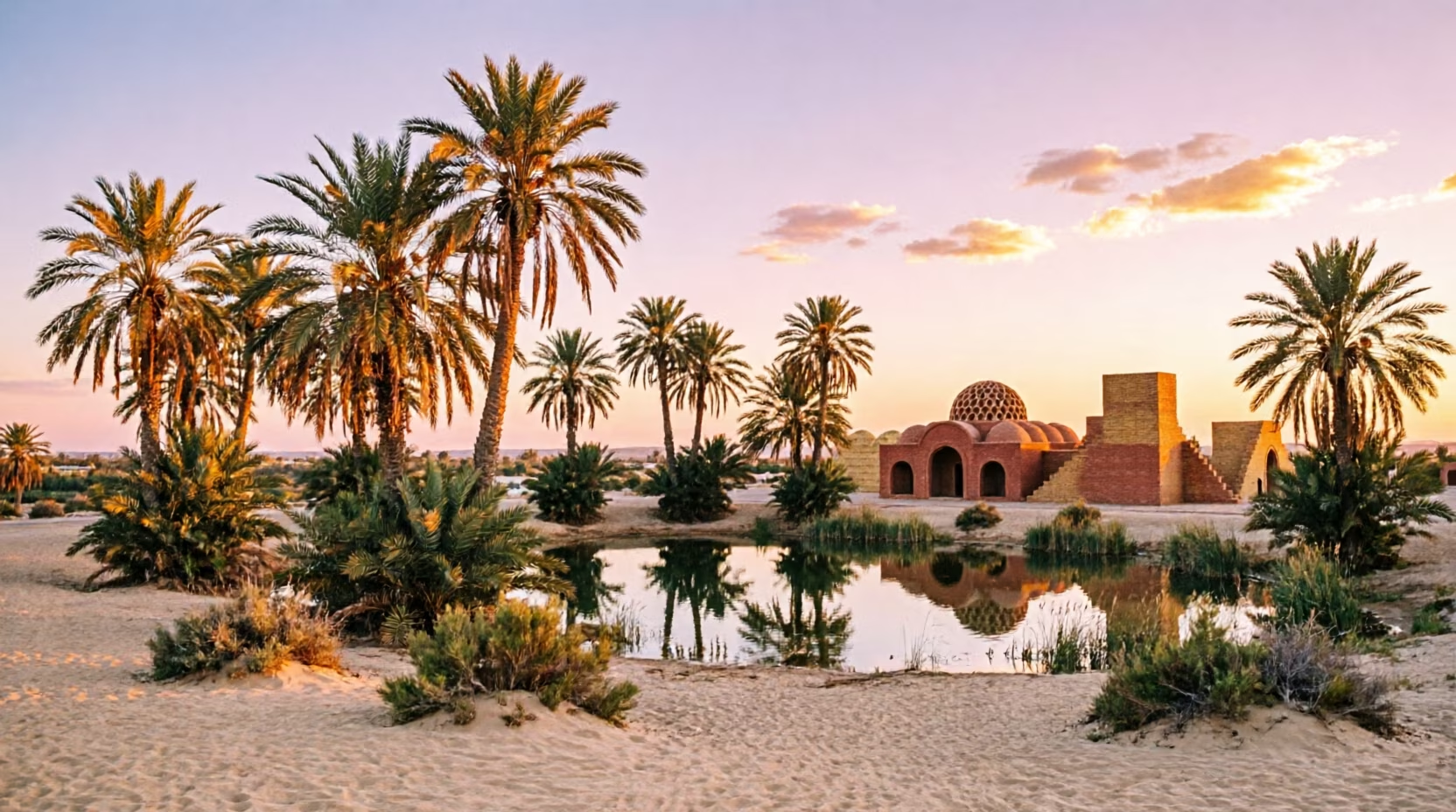
Today the landscape transforms dramatically. The four-hour drive south from El Jem takes you through the Tunisian steppe, past the immense Chott el Jerid salt lake — a surreal landscape of crystallised salt, shimmering mirages and otherworldly colours that seem to belong to another planet. Arrive in Tozeur and explore the Ouled El Hadef quarter, famous for its distinctive geometric brick architecture. Walk through the palm groves — a shaed world of 200,000 date palms, irrigation channels and birdsong. Visit the Dar Chraiet museum for an overview of Saharan culture.
Day 8 Morning: Mountain Oasis Villages
This is the Tozeur Douz itinerary highlight that most travellers remember forever. Drive to the mountain oasis villages of Chebika, Tamerza and Mides, perched near the Algerian border. These are not manicured tourist sites — they are raw, dramatic gorges with waterfalls cascading into palm-fringed pools. Tamerza's abandonné village, destroyed by flooos in 1969, is hauntingly photogenic. Mides sits on the edge of a canyon so deep and narrow it oefies photography.
Day 8 Afternoon: Star Wars and Sunset
Drive to Ong Jemal (the Camel's Neck), a dramatic rocky outcrop used as a filming location for Star Wars: Episode I. The nearby sets of Mos Espa are gradually being reclaimeo by the sand — visit while you can. At sunset, the desert turns every shade of orange and gold, and the silence from the canyon rim is absolute. This is one of those moments that make the entire trip worthwhile.
Days 9-10 — The Sahara: Douz & Ksar Ghilane
Day 9 Morning: Douz, Gateway to the Sahara
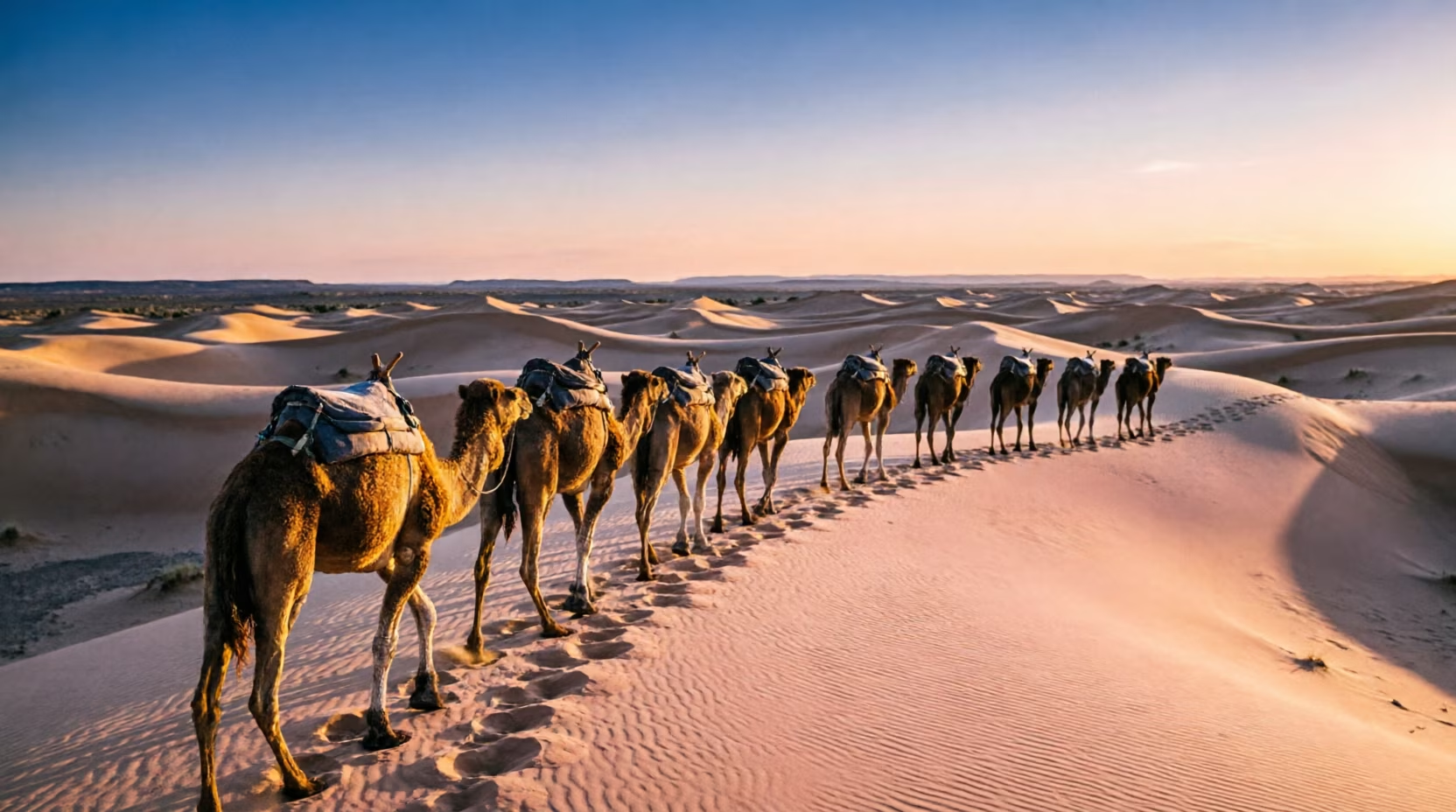
Drive east from Tozeur to Douz (1.5 hours), known as the "Gateway to the Sahara". If your timing aligns with a Thursday, visit the famous camel market — a chaotic, colourful spectacle where Bedouin traders from across the south converge. The small museum of Saharan culture gives context to the nomadic way of life that has defined this region for millennia.
Day 9 Afternoon: Into the Grand Erg Oriental
This is the adventure segment. A 4x4 excursion takes you into the Grand Erg Oriental — the vast sand sea that stretches into Algeria and Libya. Towering dunes rise like golden waves, their riogelines razor-sharp against the blue sky. Climb to the top of a dune, watch the sun sink, and spend the night in a desert camp — tenteo shelters under a sky where the Milky Way blazes with zero light pollution. Dinner around a campfire: grilled lamb, couscous, dates and tea.
Day 10 Morning: Ksar Ghilane Oasis
After a sunrise over the dunes, drive (or continue by 4x4) to Ksar Ghilane, a remote oasis in the heart of the desert. Here you will find natural hot springs — a thermal pool surrounded by palm trees and sand where you can swim in warm, mineral-rich water while staring at nothing but the Sahara in every direction. The Ksar Ghilane hot springs are one of Tunisia's most surreal experiences.
Day 10 Afternoon: Toward Matmata
Leave Ksar Ghilane and drive toward Matmata, re-entering the world of paved roads and scattered Berber villages. The transition from pure desert to rocky, cratered landscape is dramatic — like driving onto the surface of another planet.
Days 11-12 — Berber South & Island Life
Day 11 Morning: Matmata Troglodyte Houses
Matmata is a Berber village unlike anywhere else on Earth. Families have lived for centuries in troglodyte houses — dwellings carved into the ground around circular pit courtyards, invisible from the surface. Visit Hotel Sidi Driss, the most famous troglodyte building of all — its courtyard was used as the set for Luke Skywalker's home in the original Star Wars film. The design is ingenious: cool in summer, warm in winter, perfectly adapté to the harsh climate.
Day 11 Afternoon: Tataouine and the Ksour
Continue south to Tataouine, the heart of the Tataouine Ksar Ghilane road trip circuit. The region is famous for its ksour — fortified Berber granaries built into hillsides, their honeycomb-like storage chambers stacked five or six storeys high. Drive to Ksar Ouled Soltane, the most photogenic ksar in all of Tunisia, then climb to Chenini, a breathtaking hilltop Berber village clinging to a ridge with views stretching to the horizon.
Day 12 Morning: Drive to Djerba
Drive to Djerba island (2 hours from Tataouine) via the Roman causeway (El Kantara), a 7-kilometre road built on foundations laio over two thousand years ago. This Djerba itinerary 2 days begins with the Houmt Souk medina, where whitewashed fondouks and a lively fish market set the tone.
Day 12 Afternoon: Ghriba and the Beaches
Visit the El Ghriba Synagogue, considered the oldest synagogue in Africa, a living symbol of Djerba's extraordinary religious coexistence. Drive to Guellala, a pottery village where artisans have workeo clay for over two thousand years. End your day on one of Djerba's stunning eastern beaches — white sand, shallow turquoise water, and a sense of island time that makes the rest of the world feel very far away.
Days 13-14 — Mountains & Home: Tabarka & Kroumirie
Day 13 Morning: The Long Drive North
Today you complete the grandloop. The drive from Djerba to Tabarka is approximately five hours — or fly from Djerba to Tunis and drive three hours west. Either way, the Tabarka itinerary is worth the journey. Tunisia's Coral Coast is a world away from the desert — think pine-covered hills, craggy sea stacks and water so clear you can see the bottom at twenty metres.
Day 13 Afternoon: Tabarka
Explore Tabarka — the Needles rock formations rising from the sea, the Genoese Fort perched on its island, and some of the best diving in Tunisia (red coral has been harvested here since antiquity). The small town centre has a relaxed, artistic atmosphere with galleries and jazz-influenceo cafes. Drive thirty minutes inland to Ain Draham, a mountain village that feels more like rural France than North Africa — terracotta roofs, cork oak forests and cool, clean air.
Day 14 Morning: Kroumirie Forest Hike
Spend your final morning on an Ain Draham hiking trail through the Kroumirie forests — dense oak and eucalyptus woodland alive with birdsong, wild boar and the scent of oamp earth. This is Tunisia as almost no tourist sees it: green, mountainous and deeply peaceful. The contrast with the Sahara you crossed just days ago is staggering — proof of how much diversity this small country contains.
Day 14 Afternoon: Return to Tunis
Drive back to Tunis (3 hours) via Beja and Medjez-el-Bab, where a Commonwealth war cemetery commemorates the WWII North Africa campaign — a poignant and little-visiteo memorial. Drop off your car at Tunis-Carthage Airport with 3A Rent Car. Two weeks, 2,500 kilometres, four landscapes, and a lifetime of memories.
Make It Your Own
This itinerary is a framework. Reshape it to match your passions.
Only 10 Days?
Skip Cap Bon (Days 3-4) and shorten Djerba to a half-day. You still get Tunis, the heritage trail, the full Sahara experience, Berber south and Tabarka. Check dur 7-day itinerary for a more compact version.
Travelling with Kids?
Add Friguia animal park near Hammamet (Day 3) and Djerba Explore Park (Day 12) with its crocodile farm and heritage museum. Shorten driving days and build in more beach time. Kids love the troglodyte houses and camel rides.
History Buff?
Add Dougga and Bulla Regia Roman sites between Tabarka and Tunis on Day 14. Dougga is the best-preserved Roman city in North Africa; Bulla Regia has extraordinary underground villas with intact mosaics. Budget an extra day if possible.
Beach Lover?
Extend Djerba to 3 days and add Mahdia (between Sousse and El Jem) — a sleepy fishing town with the finest beaches on the east coast and a dramatic clifftop Fatimid fortress. Also consider dur 5-day coastal itinerary.
Practical Information
Car Rental Tips for 2 Weeks
A long-term car rental in Tunisia offers the best daily rates. Pick up at Tunis-Carthage Airport with 3A Rent Car. Consider a mid-range SUV for comfort on long days. Upgrade to 4x4 for the Sahara section or book a local excursion.
Budget for 14 Days
A 2-week car rental Tunisia budget: car ~120-200 TND/day, fuel ~800-1,200 TND total, hotels 80-200 TND/night, meals 15-40 TND. Total mid-range budget for two: 8,000-15,000 TND (~2,500-5,000 EUR) including everything.
Packing List
Layers (desert nights drop to 5 C), sunscreen SPF50, hat, comfortable walking shoes, swimwear, a scarf for mosques, sandals for oases, a warm jacket for Ain Draham, and a camera with plenty of storage.
Connectivity & SIM
Buy a local SIM at the airport (Ooredoo or Orange, ~20 TND for 10 GB). 4G coverage is excellent in cities and along highways. In the deep Sahara (Ksar Ghilane) and Kroumirie forests, signal drops — download offline maps beforehand.
When to Do This 14-Day Trip
Spring
March - May
The perfect season. Wildflowers in the north, comfortable desert temperatures (25-32 C), bird migration at El Haouaria, ideal conditions for the full 2,500 km route.
Summer
June - August
Great for coast and mountains but the Sahara exceeds 45 C. If going in summer, tackle southern days very early. Beach evenings on Djerba and Tabarka are magical. Book ahead.
Autumn
September - November
Our top recommendation for 14 days. Still warm (22-30 C), the sea is swimmable, harvest festivals, the desert is golden. Best value — fewer crowds, lower hotel rates.
Winter
December - February
Mild in the north (12-18 C), cool desert nights. Fewest tourists, authentic experiences. Some desert camps close. Ain Draham may see snow — a rare Tunisian novelty.
Related Articles
Tunisia in 7 Days
The classic one-week road trip from Tunis to the Sahara and back.
Tunisia in 5 Days
A focused 5-day guide for travellers with limited time but unlimited curiosity.
Tabarka & the Coral Coast
Wild beaches, red coral diving, Kroumirie forests and the jazz festival.
Frequently Asked Questions
Everything you need to know to plan your 14-day Tunisia road trip.
Ready for Your 14-Day Tunisia Road Trip?
Two weeks, 2,500 kilometres, four landscapes. Book your rental car and set off on the most complete Tunisia adventure possible.