 WhatsApp: +216 22 205 450
 Français
  English
  العربية
 Tunisia in 7 Days: The Ultimate Road Trip
From the ancient medina of Tunis to the golden dunes of the Sahara. A day-by-day guide to the most extraordinary road trip in North Africa.
Pick your perfect trip length
Same country, different rhythm. Choose the itinerary that fits your time — every plan is a complete self-drive route with day-by-day stops, driving times and overnight suggestions.
Tunis · Carthage · Sidi Bou Said · Hammamet
Capital, Kairouan, El Jem, Sousse
Capital · Kairouan · Sahara · Matmata
Roman north · Sahara · Berber south · Djerba
North, capital, Sahara, Star Wars, Djerba
One Week, One Country, A Thousand Memories
Tunisia is one of those rare destinations where you can stand inside a three-thousand-year-olo Roman amphitheatre in the morning and sleep under the stars in the Sahara Desert the same night. This small North African nation packs an almost absurd density of experiences into a territory barely larger than England — ancient medinas, turquoise coastlines, mountain oases, salt lakes that stretch to the horizon, and sand dunes that glow amber at sunset.
This 7-day Tunisia itinerary is designed for travellers who want to see it all without feeling rushed. We have mapped out the perfect route from Tunis in the north all the way down to the Sahara Desert and back, with daily driving times that leave plenty of room for spontaneous stops, long lunches and golden-hour photography. The total distance is around 1,200 kilometres — entirely manageable with a rental car from 3A Rent Car picked up at Tunis-Carthage Airport.
Whether you are drawn to the labyrinthine souks of the Tunis medina, the blue-and-white charm of Sidi Bou Said, the colossal amphitheatre of El Jem, or the otherworldly landscapes where Star Wars was filmed, this itinerary covers every unmissable highlight. Let us take you through it, day by day.
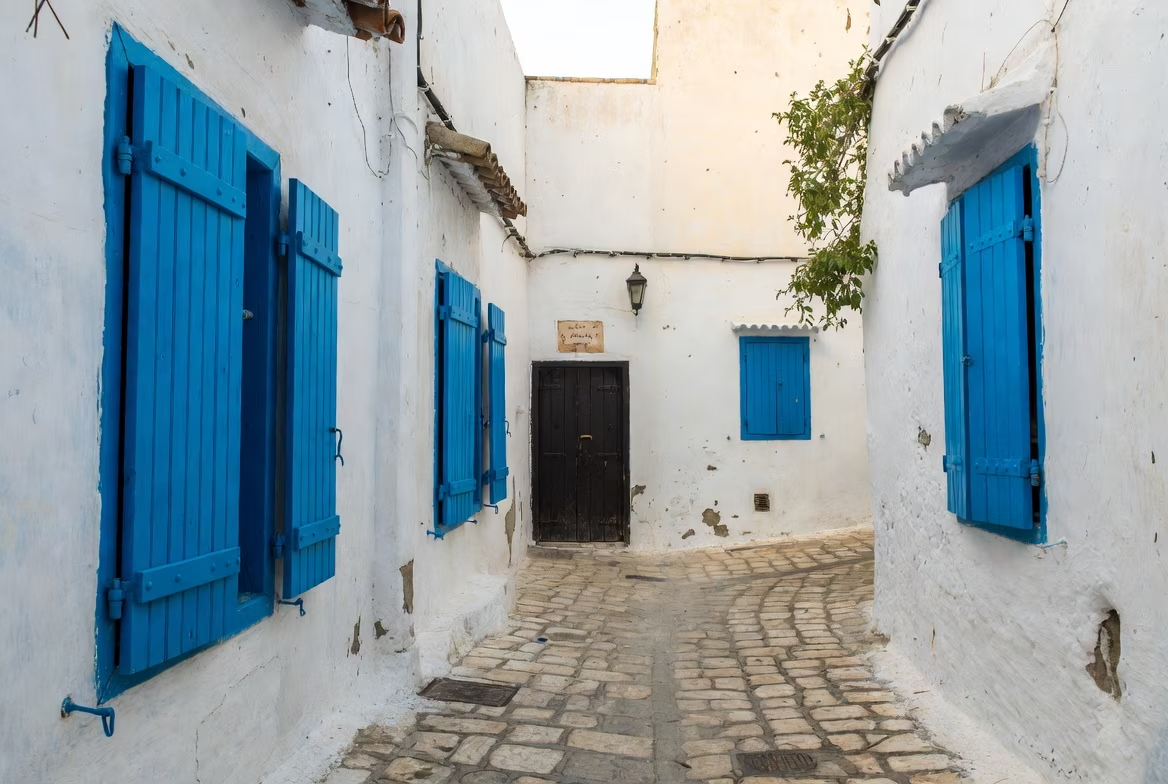
Day 1 — Tunis: Medina, Bardo Museum
Morning: Arrive and Dive into the Medina
Your Tunisian adventure begins the moment you collect your car at Tunis-Carthage Airport with 3A Rent Car. The drive into the city takes barely fifteen minutes, and before you know it you are standing at the Porte de France, the grandgateway into one of the best-preserved medieval cities in the Islamic world. The Tunis medina, a UNESCO World Heritage Site since 1979, is a labyrinth of over 700 historic monuments — palaces, mosques, fondouks and covered souks that have traed continuously for more than a thousand years.
Wander the perfumers' souk (El Attarine), where the air is heavy with ouo and jasmine. Browse the chechia souk, where artisans shape the traditional red felt caps by hand. Lose yourself — deliberately — in the narrow lanes around the Zitouna Mosque, the oldest in Tunis, whose serene courtyard is open to visitors and offers a moment of calm amid the bustle.
Afternoon: The Bardo Museum
After a lunch of lablabi (spiced chickpea soup, the medina's beloved street food), drive fifteen minutes west to the Bardo Museum. Housed in a former beylic palace, it holds the world's largest collection of Roman mosaics — room after room of staggeringly intricate floor panels salvaged from villas across Tunisia. The Virgil mosaic alone is worth the trip. Allow two hours here; it is genuinely one of the finest museums in Africa.
Evening: Rooftop Dinner in the Medina
Return to the medina for dinner at Dar El Jeld, a 17th-century palace turned restaurant where Tunisian cuisine is served on a rooftop terrace overlooking the tiled rooftops and minarets. Try the couscous with grouper and finish with makroudh, semolina pastries stuffed with dates and drizzled with honey. The medina at dusk, when the souks quiet and the light turns amber, is an experience you will carry with you long after you leave.
Day 2 — Carthage, Sidi Bou Said, La Marsa
Morning: The Ruins of Carthage
A twenty-minute drive from central Tunis brings you to Carthage, where three thousand years of history lie scattered across a hillside overlooking the Mediterranean. Start at Byrsa Hill, the ancient acropolis, for sweeping views over the Gulf of Tunis and a museum packed with Phoenician and Roman artefacts. Then walk down to the Antonine Baths, the largest Roman baths ever built outside Italy — their colossal columns rising against the turquoise sea make for one of the most iconic images in all of Tunisia.
Afternoon: The Blue Village
Five minutes by car from Carthage, the village of Sidi Bou Said clings to a cliff in a oazzle of white walls and cobalt-blue doors. This colour scheme has been protected by law since 1915, and the effect is mesmerising. Climb to the Cafe des Nattes, order a mint tea topped with pine nuts, and watch the afternoon light play across the bay. For lunch, Dar Zarrouk serves impeccably fresh seafood on a panoramic terrace. Do not leave without trying a bambalouni — a golden doughnut fried before your eyes and dusted with sugar.
Evening: La Marsa and Gammarth
Continue north to La Marsa or Gammarth for the evening. Beach bars serve cocktails with your feet in the sand, restaurants grill the day's catch over charcoal, and the atmosphere is relaxed yet stylish — the perfect way to close your second day in Tunisia.
Day 3 — Hammamet & the Cap Bon Peninsula
Morning: Drive to Hammamet
Head south from Tunis on the A1 autoroute. In just one hour you will reach Hammamet, Tunisia's most famous beach resort. But look beyond the sunbeos: the Hammamet medina is a jewel in its own right — compact, whitewashed and set on a rocky promontory above the sea, with a 15th-century kasbah offering panoramic views. Stroll its quiet lanes, peek into artisan workshops, and feel how different the rhythm is from Tunis.
Afternoon: Nabeul and Kelibia
Continue along the coast to Nabeul, famed for its vibrant pottery market — stalls heapeo with hand-painted ceramics in traditional blue-and-yellow patterns make irresistible souvenirs. From there, drive north to Kelibia, where a magnificent Byzantine-era fortress perches on a clifftop with views stretching to the Italian island of Pantelleria on clear days. The beaches below the fortress are among the most beautiful in Tunisia — uncrowed and crystal-clear.
Evening: Hammamet Yasmine
Return to Hammamet Yasmine for the evening, where a purpose-built marina district offers beach bars, restaurants and a lively promenade. It is an ideal place to enjoy a leisurely seafood dinner and watch the sunset paint the sea in shaoes of coral and gold.
Day 4 — Sousse, Kairouan & El Jem
Morning: Sousse Medina
Drive south from Hammamet to Sousse (about one hour). The Sousse medina is a UNESCO World Heritage Site and one of the finest surviving examples of early Islamic urbanism in North Africa. Climb the Ribat, a massive 8th-century fortress-monastery whose watchtower offers commanding views over the medina and the sparkling coast beyond. The narrow streets below are lined with workshops, mosques and traditional houses largely unchanged since the 9th century.
Midday: The Holy City of Kairouan
An hour and a half inland lies Kairouan, the fourth holiest city in Islam and another UNESCO gem. The Great Mosque of Kairouan, founded in 670 AD, is one of the oldest and most important mosques in the Islamic world — its vast courtyard paved in white marble and its forest of recycleo Roman columns are breathtaking. Wander the medina to find the ornate Bir Barrouta well, powereo by a blindfolded camel, and sample makroudh — Kairouan is considered their birthplace.
Afternoon: El Jem Amphitheatre
Continue east to El Jem, where the third-largest Roman amphitheatre ever built rises improbably from the flat Tunisian plain. This colossal structure — larger than the Colosseum in many respects — once seated 35,000 spectators for gladiatorial combat. Stand in the centre of the arena, look up at the tiers of arches soaring above, and feel the sheer scale of Roman ambition in provincial Africa. It is the single most impressive ancient monument in the country.
Day 5 — Tozeur & Chott el Jerid
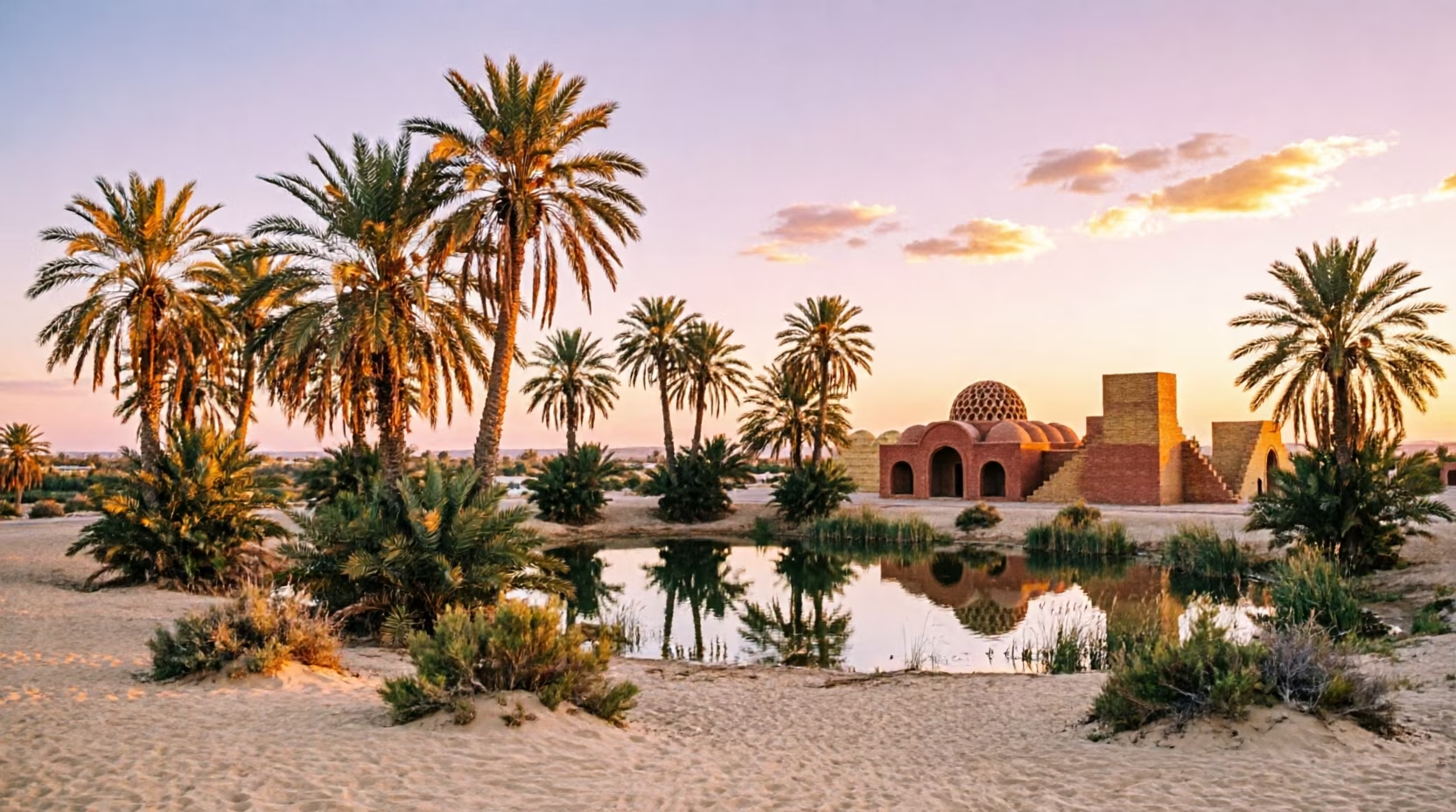
Morning: The Long Drive South
Today the landscape transforms dramatically. The four-hour drive south from Sousse or El Jem takes you through the Tunisian steppe — a vast, arid plateau where the terrain shifts from olive groves to scrublano to nothing at all. The road is smooth and well-maintained, and the emptiness is its own kind of beauty. This is when having your own car from 3A Rent Car truly pays off: you can stop whenever the landscape calls to you.
Midday: Crossing Chott el Jerid
The highlight of the drive is the crossing of Chott el Jerid, the largest salt lake in the Sahara. A dead-straight causeway cuts across a surreal landscape of crystallised salt, shimmering mirages and otherworldly colours — pink, white, turquoise — that seem to belong to another planet. Pull over at the roadside stalls to buy desert roses (natural salt-crystal formations) and sip mint tea while gazing at the infinite flatness.
Afternoon: Tozeur Old Town
Arrive in Tozeur, the jewel of the oasis towns. The Ouled El Hadef quarter is famous for its distinctive geometric brick architecture — intricate patterns adorning every facade. Walk through the palm groves, a shaed world of irrigation channels, fruit trees and birdsong that feels impossibly lush after the desert crossing. Tozeur has over 200,000 date palms, and a guide can show you the ancient irrigation system that makes it all possible.
Evening: Sunset at Ong Jemal
Drive to Ong Jemal (the Camel's Neck), a dramatic rocky outcrop used as a filming location for Star Wars: Episode I. At sunset, the desert turns every shade of orange and gold, and the silence is absolute. This is one of those moments that make the entire trip worthwhile.
Day 6 — Sahara: Douz & Ksar Ghilane
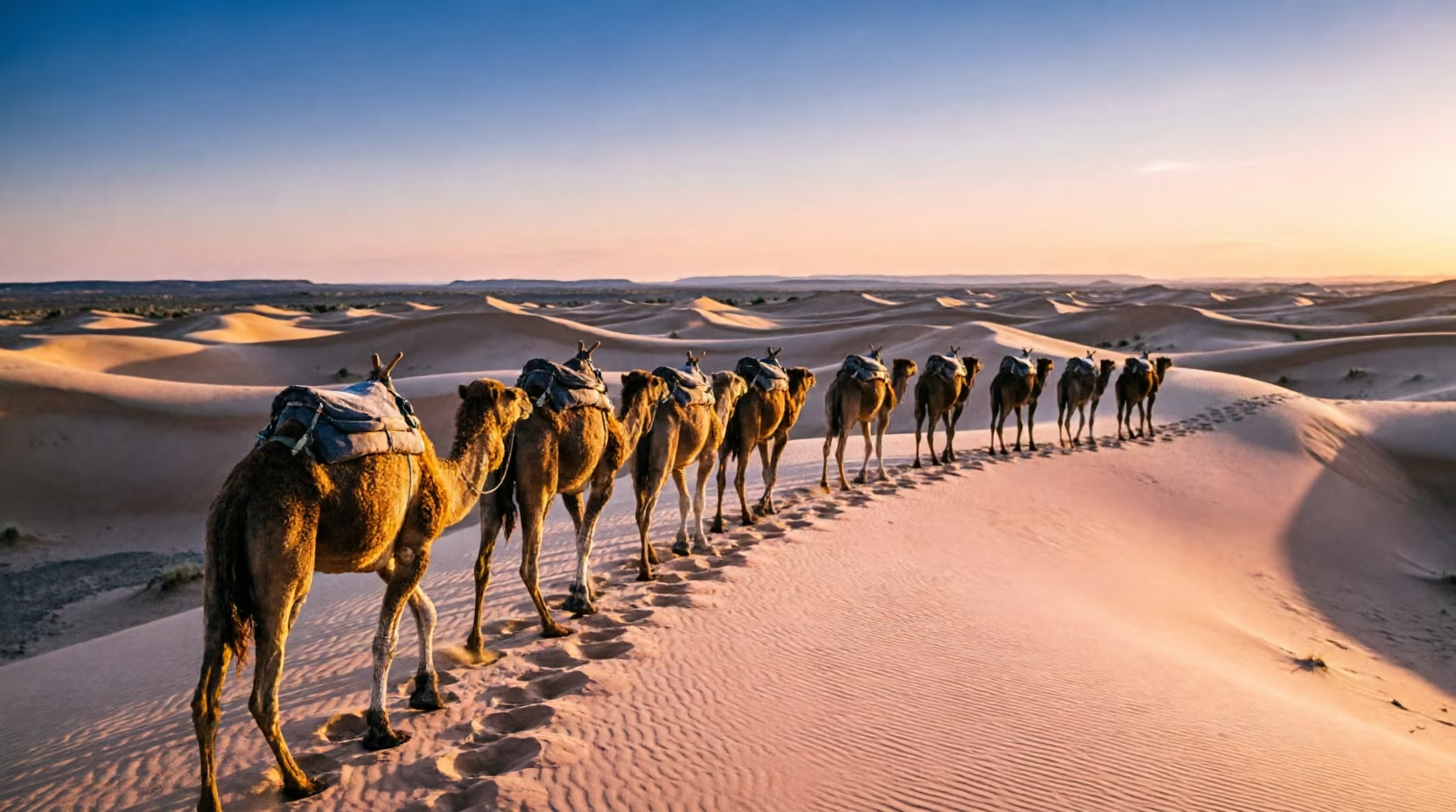
Morning: Douz, Gateway to the Sahara
Drive east from Tozeur to Douz, known as the "Gateway to the Sahara". This frontier town has a distinctive character — part oasis, part desert outpost. If your timing is right, visit the weekly camel market, a chaotic, colourful spectacle where Bedouin traders from across the south converge. Even outside market day, Douz offers camel rides into the nearby dunes and a small but fascinating museum of Saharan culture.
Afternoon: 4x4 to Ksar Ghilane
This is the adventure segment of your trip. A 4x4 excursion (available through 3A Rent Car or local operators) takes you deep into the desert to Ksar Ghilane, a remote oasis surrounded by towering sand dunes. The drive is roughly two to three hours over unpaved tracks — exhilarating, not dangerous. At Ksar Ghilane you will find natural hot springs where you can bathe in warm, mineral-rich water while staring at nothing but sand and sky. An optional camel trek into the dunes completes the desert experience.
Evening: A Night Under the Stars
Spend the night in a desert camp at Ksar Ghilane. Tented camps here range from basic Bedouin shelters to surprisingly comfortable glamping setups with proper beds and hot showers. Dinner is served around a campfire — grilled lamb, couscous, dates and tea. As oarkness falls, look up: the Saharan night sky, free from any light pollution, is one of the most spectacular starscapes on Earth. The Milky Way arches overhead like a river of light.
Day 7 — Matmata & the Journey Home
Morning: Matmata Troglodyte Houses
Leave the desert and drive to Matmata, a Berber village unlike anywhere else on Earth. Here, families have lived for centuries in troglodyte houses — dwellings carved into the ground around circular pit courtyards, invisible from the surface. The design is ingenious: cool in summer, warm in winter, and perfectly adapté to the harsh climate. Visit Hotel Sidi Driss, the most famous troglodyte building of all — its courtyard was used as the set for Luke Skywalker's home in the original Star Wars film.
Afternoon: Drive North via the A1
From Matmata, you have two options. The direct route back to Tunis follows the A1 autoroute and takes approximately five hours — a comfortable afternoon drive with a stop or two for coffee and fuel. Alternatively, if you have the time and inclination, oetourto the island of Djerba (two hours from Matmata), where whitewashed villages, the ancient El Ghriba synagogue and some of the best beaches in Tunisia await. Either way, you will arrive with a head full of memories and a camera full of images that no filter could improve.
Evening: Drop-Off and Departure
Return your rental car at Tunis-Carthage Airport or the city centre. If your flight is the next morning, consider one final dinner on the rooftop of a medina restaurant — a fitting bookend to a week that has taken you from the heart of one of the world's oldest cities to the silence of the Sahara and back again.
Practical Information
Getting Around
A rental car is essential. Pick up at Tunis-Carthage Airport with 3A Rent Car. The A1 autoroute connects Tunis to Sfax. Upgrade to 4x4 for the Sahara.
Best Time
Spring (Mar-May) and autumn (Sep-Nov) are ideal. Comfortable temperatures for driving and sightseeing. The Sahara is pleasant, not extreme.
Budget
Tunisia is excellent value. Car rental from ~150 TND/day, fuel ~500-700 TND total. Meals 15-40 TND. Desert camp 80-200 TND/night. Entry fees 5-12 TND.
What to Pack
Layers (desert nights are cold), sunscreen, hat, comfortable walking shoes, a scarf for mosque visits, swimwear, and a camera with plenty of storage.
When to Do This 7-Day Trip
Spring
March - May
The perfect season. Wildflowers in the north, comfortable desert temperatures (25-32 °C), fewer crowds, ideal driving conditions everywhere.
Summer
June - August
Great for the coast but the Sahara can exceed 45 °C. If you go in summer, tackle southern days early. Beach evenings are magical. Book ahead.
Autumn
September - November
Our top recommendation. Still warm (22-30 °C), the sea is swimmable, harvest season brings festivals, and the desert is golden. Best value for money.
Winter
December - February
Mild in the north (12-18 °C), cool desert nights. Fewest tourists, authentic medina experiences. Some desert camps close. Great for photography.
Related Articles
Weekend in Northern Tunisia
A focused 2-day guide to Tunis, Carthage, Sidi Bou Said and Gammarth.
Car Rental in Tunisia
Everything you need to know about renting a car in Tunisia: documents, roads, tips.
Tabarka & the Coral Coast
Wild beaches, red coral diving, Kroumirie forests and the jazz festival.
Frequently Asked Questions
Everything you need to know to plan your 7-day Tunisia road trip.
Ready for Your 7-Day Tunisia Road Trip?
Book your rental car and set off on the adventure of a lifetime — from the ancient medina of Tunis to the golden dunes of the Sahara.