 WhatsApp: +216 22 205 450
 Français
  English
  العربية
 Tunisia sits at the crossroads of Africa and Europe, where the Mediterranean meets the Sahara and three thousand years of civilisation have left their mark on every hillside, medina and coastal village. This compact North African country — smaller than the state of Florida — packs in eight UNESCO World Heritage Sites, over 1,300 km of coastline, Roman amphitheatres that rival the Colosseum, and some of the warmest hospitality you will encounter anywhere on earth.
Whether you are planning a beach holiday in Hammamet, a cultural deep-dive into Tunis and Carthage, a Saharan overnight under the stars, or a full-country road trip that hits all of the above, this guide has you covered. We will walk through the best time to visit in 2026, the top regions to explore, how to get around, what to eat, cultural etiquette, safety advice and practical information on visas, currency and SIM cards. And if you want real freedom to explore at your own pace, renting a car from €19/day is the single best investment you can make.
Why Visit Tunisia in 2026?
Tunisia has quietly undergone a renaissance. New boutique riads in the Tunis Medina, upgraded motorways, a growing food-and-wine scene, and a wave of community tourism initiatives in the south have transformed the travel experience. Here is why 2026 is arguably the best year to make the trip:
-
Unmatched heritage density: Eight UNESCO World Heritage Sites including the ruins of Carthage, the perfectly preserved Roman city of Dougga, the El Jem amphitheatre (third-largest in the Roman world), and the labyrinthine Medina of Tunis. Few countries pack so much history into so few square kilometres.
-
Mediterranean beaches for every taste: From the all-inclusive resort strips of Hammamet and Djerba to wild, empty coves on Cap Bon and the rugged Coral Coast near Tabarka. The water is warm enough to swim from May through October.
-
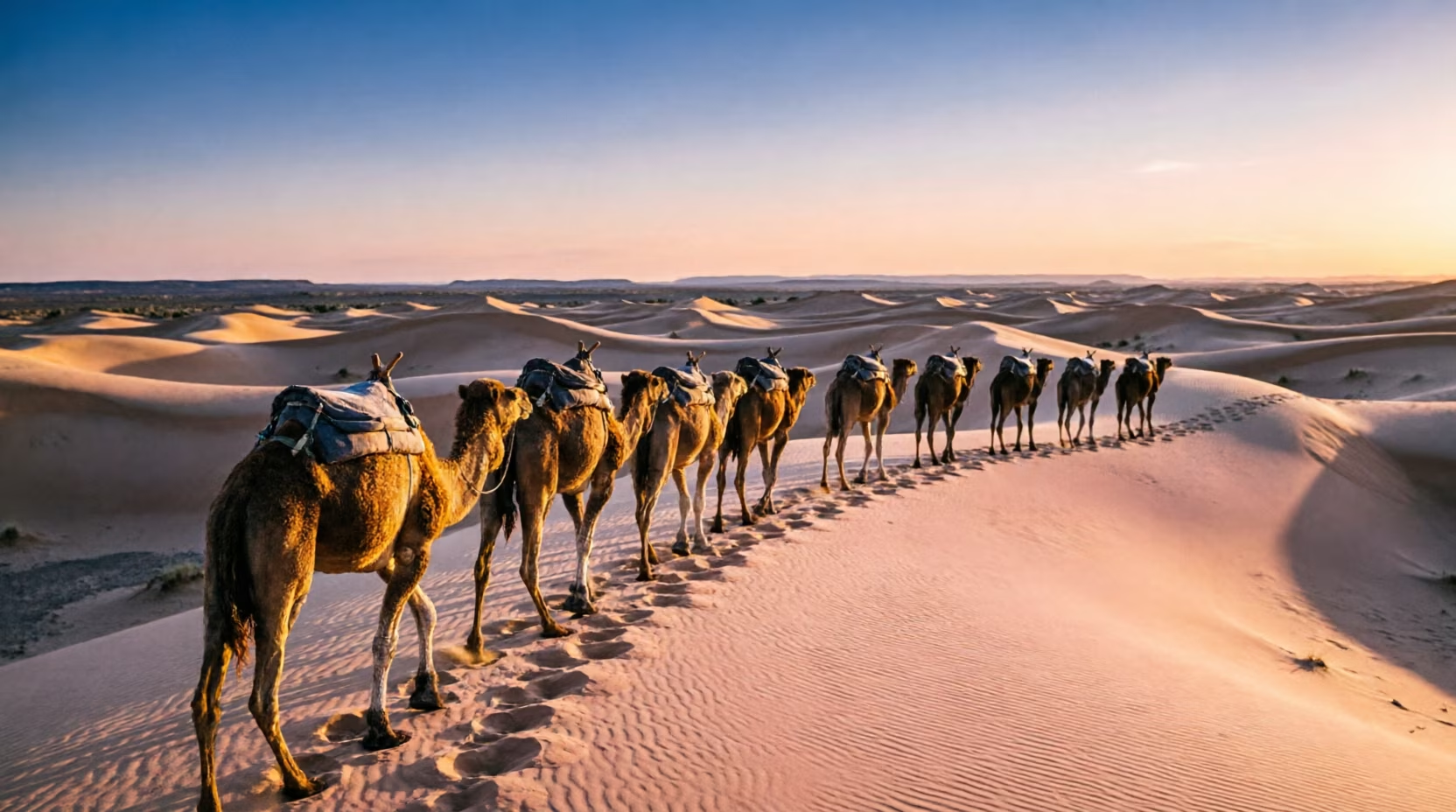
The Sahara within easy reach: Ride a camel at sunrise in Douz, sleep in a desert camp under a blanket of stars, or drive across the surreal salt flats of Chott el Jerid. The Sahara is a 5-hour drive from the coast — no separate flight needed.
-
Incredible food at tiny prices: Freshly grilled sea bream, spicy harissa, flaky brik pastry, fragrant couscous and mint tea on every corner. A full restaurant meal for two costs 8–15 EUR. Tunisia is a food lover's paradise that has yet to be discovered by the masses.
-
Exceptional value for money: Hotels from 30 EUR/night, car rental from 25 EUR/day, museum entries for 2–3 EUR. Your euro or pound goes three to four times further here than in southern Europe.
Best Time to Visit Tunisia in 2026
Tunisia has a Mediterranean climate on the coast and a semi-arid to desert climate inland. The season you choose shapes your experience, your budget and how crowded the sites will be. Here is a breakdown:
| Season | Temperature | Best For | Crowds & Prices |
|---|---|---|---|
| Spring Mar – May |
18–28°C | Road trips, sightseeing, hiking, wildflowers | Moderate crowds, good prices |
| Summer Jun – Aug |
28–40°C | Beach holidays, water sports, nightlife | Peak season, highest prices |
| Autumn Sep – Nov |
20–30°C | Swimming (warm sea), desert trips, olive harvest, festivals | Our top pick — few crowds, great prices |
| Winter Dec – Feb |
10–18°C | Cultural trips, Sahara (mild days), budget travel | Lowest prices, very few tourists |
Top Regions to Explore in Tunisia
Tunisia is small enough to cross by car in a single day, yet rich enough to fill several weeks of exploration. Here are the six regions every visitor should have on their radar:
Tunis & the Medina
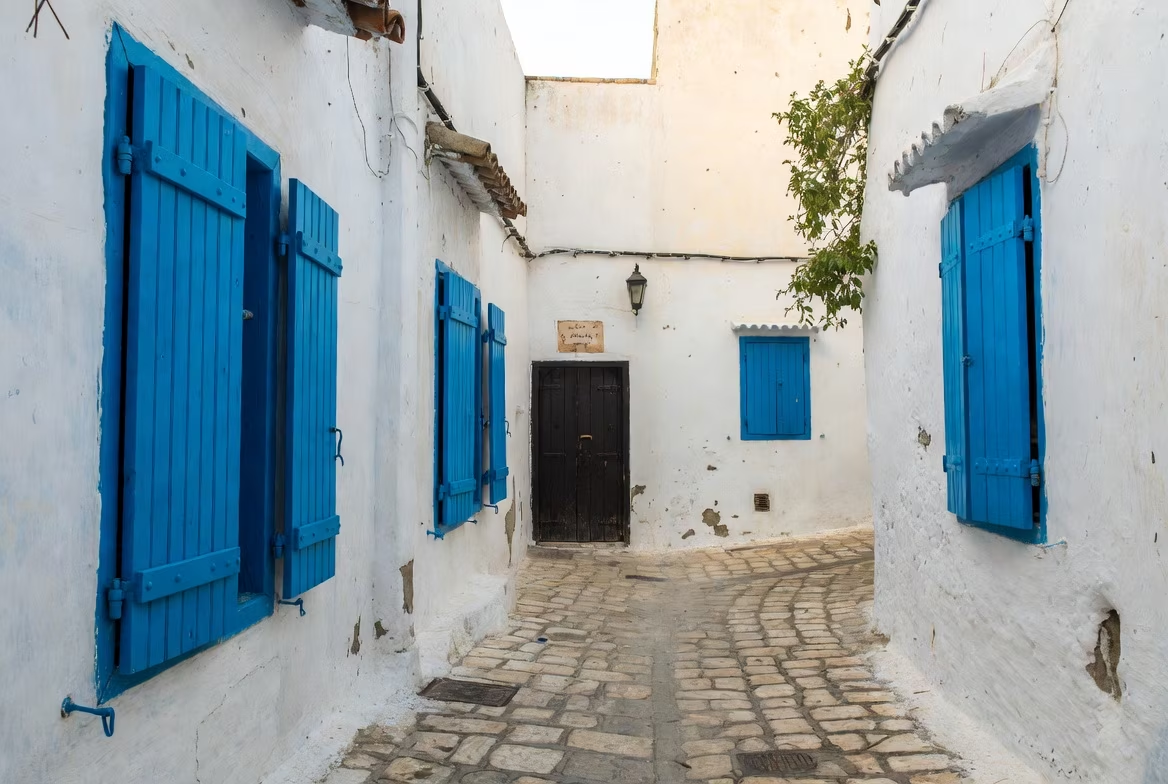
The beating heart of the country. Walk the UNESCO-listed Medina's 700 monuments, visit the Bardo Museum (home to the world's finest Roman mosaics), stroll the French-era Ville Nouvelle and eat at rooftop restaurants with old-city views. Allow 2 full days.

Carthage & Sidi Bou Said
The ruins of Hannibal's legendary Punic city sit on a hill above the Gulf of Tunis. Combine with a walk through the blue-and-white clifftop village of Sidi Bou Said — the most photographed spot in all of North Africa. A 20-minute drive from central Tunis.

Hammamet & Cap Bon
Tunisia's premier beach destination. Yasmine Hammamet offers all-inclusive resorts and golf courses, while the old town has authentic souks and a 15th-century kasbah. Continue to Cap Bon for vineyards, citrus groves and uncrowded beaches. Read our full Hammamet guide.

Sousse, El Jem & Kairouan
The "Pearl of the Sahel" combines a UNESCO Medina, a 9th-century Ribat fortress and lively nightlife. Day-trip to the massive El Jem amphitheatre (30 min south) and the holy city of Kairouan (1 hr west) — Islam's fourth holiest city and a living architectural museum.
Djerba
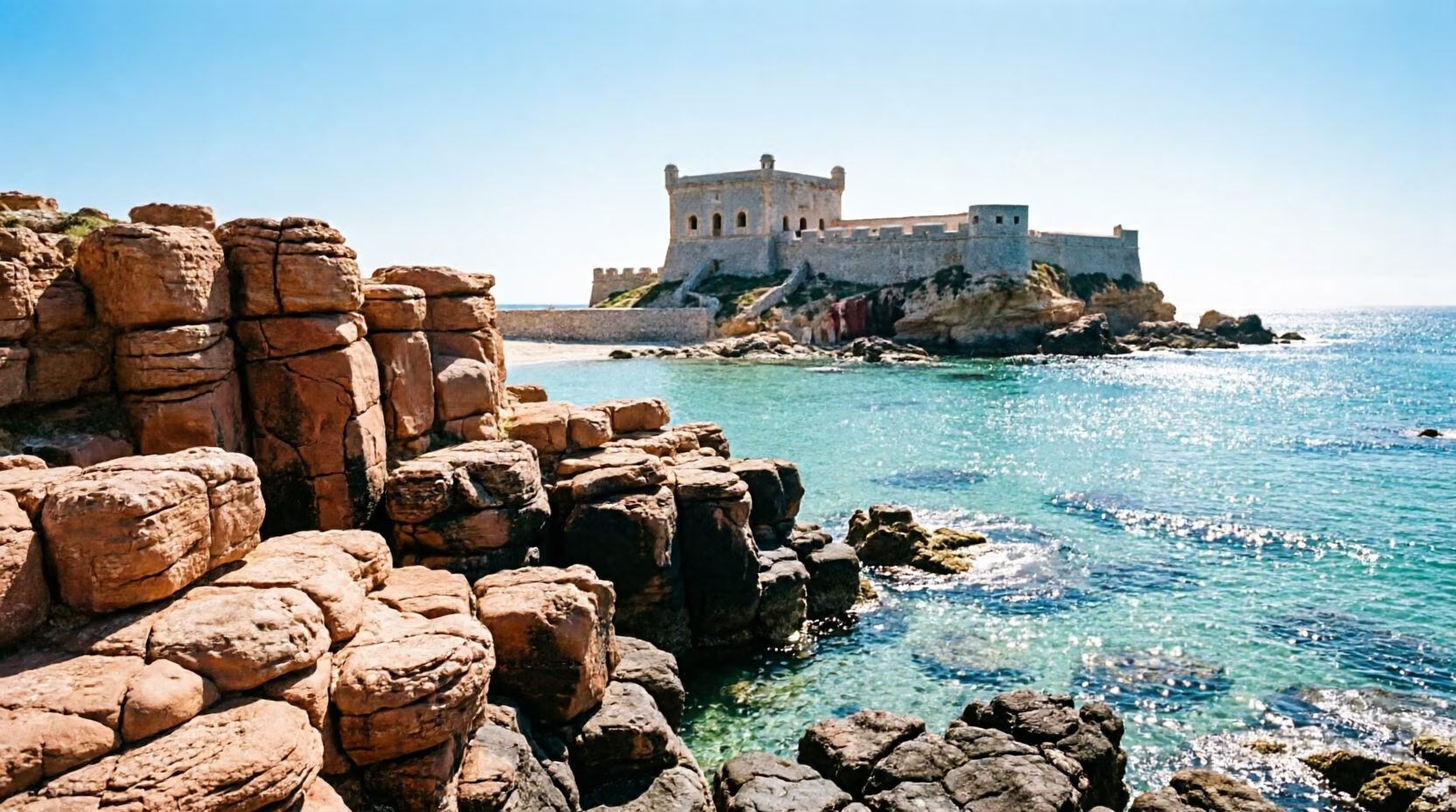
Tunisia's largest island offers white-sand beaches, the world-famous Djerbahood street-art village, the ancient El Ghriba Synagogue and a uniquely laid-back atmosphere. Perfect for 3–5 days. See our Djerba road trip guide.
The Sahara & Southern Oases
Tozeur's palm oasis (200,000 trees), the mirror-like Chott el Jerid salt lake, mountain oases of Chebika, Tamerza and Mides, Star Wars film sets at Ong Jmal, and Matmata's underground cave dwellings. An overnight desert camp in the Grand Erg Oriental is a once-in-a-lifetime experience.
Sample Itineraries: 3, 5, 7 or 14 Days
Not sure how to fit it all in? Pick the road trip that matches your trip length. Each guide gives you a day-by-day route, driving times, hotel recommendations and the best stops along the way — built by us after years of helping visitors plan exactly these trips.


Getting Around Tunisia: Why a Rental Car is Best
Tunisia has trains (SNCFT) connecting Tunis to Sousse and Sfax, plus shared minibuses (louages) that cover most routes. But both are slow, infrequent and restrict you to main towns. The best way to truly experience the country — especially the coast, the Sahara and off-the-beaten-path villages — is with your own rental car.
✓ Freedom to stop wherever you want — hidden beaches, roadside cafes, ancient ruins
✓ Reach places public transport cannot — Sahara oases, Cap Bon villages, mountain roads
✓ Save hours each day vs. waiting for buses and louages
✓ Affordable: economy cars from €19/day including full insurance, GPS and unlimited mileage
✓ 3A Rent Car offers free 24/7 airport pickup at Tunis, Enfidha, Monastir and Djerba airports

Essential driving tips for Tunisia
-
Drive on the right. Roads are generally good on main routes. The A1 motorway connects Tunis to Sousse and Sfax. Secondary roads vary — watch for potholes in rural areas.
-
Speed limits: 50 km/h in towns, 90 km/h on national roads, 110 km/h on motorways. Speed cameras exist on major routes. Unmarked speed bumps are common near villages — stay alert.
-
Fuel is very cheap: Around 2.2 TND per litre (roughly €0.67). Stations are plentiful on main roads. Fill up before heading into the Sahara or remote mountain areas.
-
Avoid night driving in rural areas. Unlit vehicles, pedestrians and livestock on roads create hazards after dark. Stick to daylight driving outside cities.
Not sure which car to choose? Read our complete fleet guide to compare economy, SUV, automatic and luxury options for every trip type. You can also browse our full fleet page with live pricing.
Safety & Cultural Tips for Visitors
Is Tunisia safe? Yes. Tunisia is generally safe for tourists in 2026. The main tourist regions — Tunis, Hammamet, Sousse, Djerba and the northern Sahara — are well-policed and have seen significant security investment. Standard travel precautions apply, just as they would in southern Europe:
-
Stick to established tourist routes and major cities. Avoid the border zones with Algeria and Libya (restricted military areas).
-
Keep valuables out of sight in your parked car. Use hotel safes for passports and large amounts of cash.
-
Get travel insurance. Healthcare is good in cities (private clinics) but limited in remote areas. Emergency numbers: Police 197, Ambulance 198.
Cultural etiquette
Tunisia is the most liberal and progressive country in North Africa, but it is still a predominantly Muslim society with its own customs. A little cultural awareness goes a long way:
-
Bargaining is expected in medinas and souks. Start at about 40–50% of the asking price and negotiate with humour. Fixed prices apply in supermarkets, restaurants and petrol stations.
-
Dress modestly when visiting mosques, medinas and rural villages — cover shoulders and knees. Beach resorts, city centres and hotels are relaxed about Western clothing.
-
Ask before photographing people, especially women and older locals. Most Tunisians are happy to pose, but permission shows respect.
-
Greetings are warm. A handshake or hand on heart is standard. Tunisians are famously hospitable — do not be surprised if you are invited for tea or a meal at someone's home.
-
Ramadan: If you visit during Ramadan (expected late February–March in 2026), restaurants may close during daytime in smaller towns. Tourist areas stay open. Avoid eating or smoking in public during fasting hours out of respect.
Tunisian Food: What to Eat & Where
Tunisian cuisine blends Berber, Arab, Mediterranean and French influences into something uniquely delicious. Meals are generous, flavours are bold (think harissa and cumin), and prices are strikingly low. Here is what to order:

Must-try dishes
-
Brik: Crispy fried pastry filled with egg, tuna, capers and parsley. Every Tunisian meal starts with brik. Eat it with your hands and try not to break the egg yolk — that is the mark of a skilled eater.
-
Couscous: The national dish, traditionally served on Fridays with lamb, chickpeas and seasonal vegetables in a fragrant broth. On the coast, try couscous au poisson (fish couscous) — a Tunisian speciality.
-
Ojja: A spicy tomato-and-pepper stew with eggs, often enriched with merguez sausage or shrimp. Popular for brunch. Best enjoyed with fresh crusty bread from a nearby bakery.
-
Harissa: Tunisia's iconic chilli paste — sun-dried peppers, garlic, caraway and olive oil. Served alongside almost every dish. Buy a jar from a market to take home; it is the country's best edible souvenir.
-
Mint tea & Turkish coffee: Tunisians drink sweet mint tea (sometimes with pine nuts) throughout the day. Turkish coffee is thick and strong. Both are the social glue of daily life — never refuse an offer.
Budget Tips: How Much Does a Tunisia Trip Cost?
Tunisia is exceptional value for money. Here is what a typical day costs for a couple travelling at a comfortable mid-range level:
• Car rental: €19–35/day (economy to sedan, all-inclusive)
• Fuel: €5–10/day (petrol is very cheap)
• Mid-range hotel or riad: €30–60/night
• Meals (3 per day for two): €15–25/day
• Sightseeing & museums: €5–10/day
Total: roughly €75–140/day for two people including car, accommodation, food and activities. Budget travellers can halve this by staying in guesthouses and eating street food.
Money-saving tips
-
Book your car for 7+ days to unlock weekly discounts (up to 20% off). A 15-day rental drops to as little as €19/day even for compact cars. See our fleet & pricing guide.
-
Exchange money at the airport on arrival. Rates are government-regulated and uniform across Tunisia. ATMs offer competitive rates. Never exchange on the street.
-
Stay in dars (guesthouses) inside medinas. These restored traditional homes offer character, breakfast included, and rates of 60–120 TND/night (18–36 EUR). Far more authentic than chain hotels.
-
Travel in shoulder season (April–May or Sep–Oct). You will pay 30–40% less for hotels and car rental compared to the July–August peak, and the weather is arguably better for sightseeing.
Practical Information: Visa, Currency & SIM Cards
Visa & entry requirements
Citizens of the EU, UK, USA, Canada, Australia, Japan and most Arab countries do not need a visa for stays up to 90 days. You need a valid passport with at least 6 months remaining. A return flight ticket and hotel booking may be requested at immigration, though this is rare. Some nationalities require a visa from a Tunisian consulate — check before you travel.
Currency & money
The Tunisian Dinar (TND) is a closed currency — you cannot buy or sell it outside Tunisia. Exchange euros, pounds or dollars at the airport bureau de change on arrival (rates are fixed nationwide). ATMs are widely available in cities and accept Visa and Mastercard. Carry cash for markets, small restaurants and rural areas where card terminals are rare. One euro equals approximately 3.3 TND in 2026.
SIM cards & internet
Buy an Ooredoo or Orange Tunisia SIM card at the airport arrivals hall for 10–20 TND. You get a local number plus a generous data allowance (10–30 GB) that covers 4G in most of the country. Coverage thins out in the deep Sahara but is solid along all major roads and tourist areas. A local SIM is essential for Google Maps navigation if you are driving.
What to pack
-
Sun protection: High-SPF sunscreen, wide-brim hat, quality sunglasses. The Tunisian sun is strong year-round, especially in the south.
-
Comfortable walking shoes: Medinas have cobblestones and uneven surfaces. Bring sandals for the beach and closed shoes for ruins and desert walks.
-
Light layers and a scarf: Evenings can be cool in spring and autumn. A scarf doubles as mosque-visit cover, sun shield and Saharan wind protection.
-
Power adapter: Tunisia uses European two-pin plugs (Type C/E, 230V). Bring a universal adapter if coming from the UK, US or Australia.
Frequently Asked Questions About Visiting Tunisia
Do I need a visa to visit Tunisia?
Citizens of the EU, UK, USA, Canada, Australia and most Arab countries do not need a visa for stays up to 90 days. You only need a valid passport with at least 6 months remaining. Some nationalities require a visa obtained from a Tunisian consulate before arrival. Check with your local embassy for the latest 2026 entry requirements.
Is Tunisia safe for tourists in 2026?
Yes, Tunisia is considered safe for tourists. Major tourist areas including Tunis, Hammamet, Sousse, Djerba and the Sahara are well-policed and have undergone significant security upgrades. Exercise normal precautions as you would in any Mediterranean destination — avoid displaying expensive jewellery, lock your car and stay in well-lit areas at night.
What is the best time of year to visit Tunisia?
Spring (March–May) and autumn (September–November) are ideal, with warm temperatures around 20–28°C, fewer crowds and affordable prices. Summer (June–August) is perfect for beach holidays but hot inland (35–40°C). Winter (December–February) is mild on the coast (15–18°C) and offers the cheapest prices for car rental and hotels.
What currency is used in Tunisia?
The Tunisian Dinar (TND). One euro equals roughly 3.3 TND in 2026. ATMs are widely available in cities and tourist areas. Credit cards are accepted at hotels, large restaurants and petrol stations, but carry cash for markets, small shops and rural areas. You cannot buy or sell dinars outside Tunisia — exchange at the airport on arrival.
What languages are spoken in Tunisia?
The official language is Arabic, and most Tunisians speak Tunisian Arabic (Derja). French is widely spoken as a second language, especially in cities, hotels and restaurants. English is increasingly common among younger Tunisians and in tourist areas. Learning a few Arabic phrases like 'Salam' (hello) and 'Shukran' (thank you) is always appreciated.
What should I wear in Tunisia?
Tunisia is the most liberal country in North Africa, and casual Western clothing is perfectly fine in cities, hotels and resorts. However, when visiting mosques, medinas and rural villages, cover shoulders and knees out of respect. Beachwear is for the beach only. Bring a light scarf for mosque visits and sun protection in the Sahara.
Is Tunisia an expensive destination?
Tunisia is one of the most affordable Mediterranean destinations. A meal at a local restaurant costs 10–20 TND (3–6 EUR), a litre of petrol around 2.2 TND (0.67 EUR), and a mid-range hotel 100–200 TND (30–60 EUR) per night. Car rental starts from 25 EUR/day with full insurance. Your euro or pound stretches very far here.
What is the best way to get around Tunisia?
Renting a car is by far the best way to explore Tunisia. Public transport exists (trains, buses, louages) but is slow and limits where you can go. A rental car gives you freedom to explore at your own pace — from coastal highways to remote Saharan oases. 3A Rent Car offers free airport pickup, full insurance and GPS included from 25 EUR/day.

