 WhatsApp: +216 22 205 450
 Français
  English
  العربية
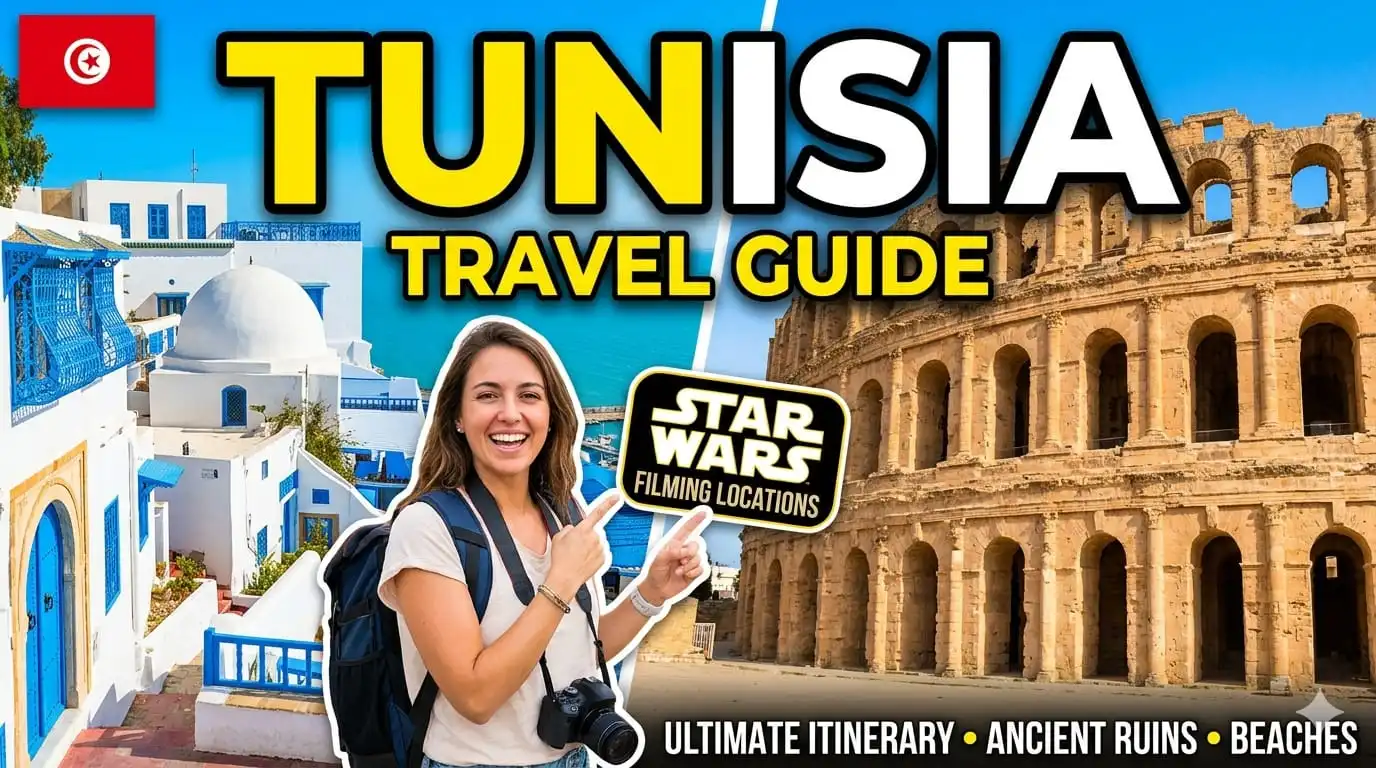
 Tunisia is one of the Mediterranean's most rewarding and underrated destinations. Ancient Roman ruins, Saharan dunes, turquoise coastlines, medieval medinas and some of the warmest hospitality you will find anywhere — all packed into a country smaller than the state of Wisconsin. But like any new destination, a little preparation goes a long way.
We have spent years helping travellers explore Tunisia with our car rental service, and these are the 20 tips we share with every first-time visitor. Whether you are planning a week-long road trip or a quick beach holiday, these insider tips will help you travel smarter, spend less and connect more deeply with Tunisian culture.
Before You Go
Check Your Visa Requirements
Citizens of the EU, UK, USA, Canada, Australia and most other Western nations can enter Tunisia visa-free for up to 90 days. Your passport must be valid for at least 6 months beyond your arrival date. You will receive a stamp on entry — no forms, no fees. If your nationality requires a visa, apply at your nearest Tunisian consulate at least 3 weeks ahead. Always carry a printed copy of your return flight details, as immigration officers occasionally ask for it.
Get Travel Insurance
Tunisia does not require proof of travel insurance, but we strongly recommend it. Medical care in private clinics is affordable by European standards (a doctor visit costs 50–80 TND), but hospital stays and medical evacuation are expensive without coverage. Look for a policy that covers medical emergencies, trip cancellation, lost baggage and — if you plan to drive — roadside assistance. Most policies cost €15–30 for a two-week trip.
Pack Smart for the Climate
Tunisia's climate ranges from Mediterranean on the coast to semi-arid in the south. Spring and autumn (the best seasons to visit) call for lightweight layers, a light jacket for evenings and comfortable walking shoes. Summer demands breathable fabrics, high-SPF sunscreen, a hat and sunglasses. Winter in the north can be wet and cool (10–15°C), so pack a warm layer and a rain jacket. Regardless of season, bring modest clothing that covers shoulders and knees for visiting mosques and medinas.
Buy a Local SIM Card on Arrival
A prepaid Tunisian SIM card is the cheapest way to stay connected. Ooredoo, Orange and Tunisie Télécom all sell tourist-friendly packages at the airport. For 20–30 TND (~€6–9) you get a SIM with 10–20 GB of 4G data and local calls — far cheaper than roaming. You will need your passport to register. Data coverage is strong in cities and along main highways; it gets patchy in remote desert areas south of Tozeur.
Getting Around
Rent a Car for Maximum Freedom
Tunisia's best experiences — hidden beaches, mountain villages, desert oases — are off the beaten path. A rental car gives you the freedom to explore at your own pace without waiting for buses or negotiating with taxi drivers. At 3A Rent Car, economy cars start from €19/day for longer rentals, with full insurance, unlimited mileage and free airport pickup included. Book ahead during peak season (July–August) when demand is highest.
Know the Driving Rules
Tunisia drives on the right. Speed limits are 50 km/h in towns, 90 km/h on rural roads and 110 km/h on motorways (autoroutes). Seatbelts are mandatory. The motorway network (A1 to Sfax, A3 to Béja, A4 to Bizerte) is modern and well-maintained, with tolls of 1–5 TND per section. In cities, watch out for scooters and pedestrians. Outside cities, be alert for livestock on rural roads, especially at dusk. An international driving permit is recommended alongside your national licence.
Use Offline Navigation
Download Google Maps offline for all of Tunisia before you leave home — data coverage drops in rural and desert areas. Maps.me and OsmAnd are excellent alternatives with detailed offline maps. Some smaller roads and desert tracks may not appear on Google Maps; ask locals for directions. In medinas, GPS is useless — navigate by landmark, follow the flow of people, or ask a shopkeeper.
Fuel Up Before Heading South
Petrol stations are plentiful along the coast and in major cities, but they thin out dramatically south of Gafsa and in the desert regions. Always fill your tank before heading into the Sahara. Fuel is cheap by European standards: roughly 2.5–3 TND per litre for unleaded (about €0.80/L). Most stations accept cash only, though some larger ones in cities take cards.
Culture & Etiquette
Learn a Few Arabic Greetings
Tunisians speak a dialect of Arabic called Derja, with heavy French influence. While French works everywhere and English is common in tourist areas, a few Arabic words will transform your interactions. “Salaam alaykum” (peace be upon you) is the universal greeting. “Shukran” means thank you. “Bislema” is goodbye. “Inshallah” (God willing) is used constantly. Even a clumsy attempt at Arabic will earn you genuine smiles and warmer hospitality.
Dress Respectfully
Tunisia is the most liberal country in North Africa, and in resort towns and cities you will see a wide range of dress styles. However, when visiting medinas, mosques, rural areas and conservative neighbourhoods, cover your shoulders and knees. Women do not need to wear a headscarf (most Tunisian women in cities do not), but carrying a light scarf for mosque visits is wise. On beaches, swimwear is perfectly fine. The general rule: dress for the context, just as you would in southern Italy or Greece.
Understand Tipping Culture
Tipping is appreciated but never aggressive. In restaurants, leave 10% of the bill if service was good — check first whether a service charge is included. Round up taxi fares to the nearest dinar. Hotel porters expect 2–3 TND per bag. Tour guides receive 10–20 TND per person for a half-day. At hammams, tip the attendant 5–10 TND. Always tip in cash and in Tunisian Dinars.
Master the Art of Bargaining
Haggling is expected in medinas and souks — never pay the first price. Start at about 40–50% of the asking price and work toward a middle ground. Keep it friendly and humorous; bargaining is a social ritual, not a fight. If the seller does not budge, walk away — they will often call you back. However, do not haggle in supermarkets, restaurants or any place with printed prices. And always agree on a taxi fare before getting in.
Food & Drink
Try the Must-Eat Dishes
Tunisian cuisine is bold, spicy and deeply flavourful. Do not leave without trying: Couscous (the national dish, usually with lamb or fish and vegetables), Brik (crispy fried pastry filled with egg, tuna and capers — eat it with your hands), Lablabi (chickpea soup with bread, harissa and olive oil — a winter favourite), Ojja (eggs poached in spicy tomato-pepper sauce), and Makroudh (date-filled semolina pastry). Harissa, the fiery chili paste, accompanies almost every meal.
Eat Street Food Fearlessly (But Wisely)
Tunisian street food is some of the best and cheapest in the Mediterranean. A fricassé (deep-fried bread stuffed with tuna, egg, harissa and olives) costs 2–3 TND. A chapati (grilled meat wrap) runs 4–6 TND. Bambalouni (sugar doughnuts) go for 1 TND. Follow the locals — busy stalls with high turnover are the safest and freshest. Avoid pre-made salads sitting in the sun, and stick to freshly cooked items during your first few days until your stomach adjusts.
Drink Bottled Water in the South
Tap water in Tunis and major coastal cities is chlorinated and technically safe, but the mineral content and taste vary. Most visitors and many locals drink bottled water, which is extremely cheap — about 0.5 TND for 1.5 litres. In the south and desert regions, always stick to bottled. The local brands (Safia, Ain Garci, Marwa) are all good. Stay hydrated: you will lose more water than you expect in the Tunisian sun, especially between May and October.
Safety & Health
Tunisia Is Safer Than You Think
The biggest misconception about Tunisia is that it is dangerous. In reality, tourist areas are very safe. Tunis, Sidi Bou Said, Hammamet, Sousse, Djerba and the Saharan tourism zone are well-policed and welcoming. Petty theft can occur in crowded markets (as in any tourist hotspot), so keep valuables secure and be aware of your surroundings. Avoid the border zones with Libya and Algeria, which some governments advise against. Use common sense and you will feel perfectly comfortable.
Protect Yourself from the Sun
The North African sun is fierce, especially from May to September. Wear SPF 50+ sunscreen, a wide-brimmed hat and sunglasses. Reapply sunscreen every 2 hours, more often if swimming. Drink at least 2–3 litres of water daily. Avoid outdoor sightseeing between noon and 3pm in summer — do as the locals do and take a long lunch indoors. Heatstroke is a genuine risk for pale-skinned visitors who underestimate the intensity.
Know Where to Find a Pharmacy
Tunisian pharmacies (pharmacie, marked with a green cross) are excellent. Pharmacists are well-trained, speak French (often English), and can advise on minor ailments without a doctor visit. Many medications that require prescriptions elsewhere are available over the counter in Tunisia, including antibiotics, stomach remedies and antihistamines. Every town has a duty pharmacy (pharmacie de garde) that stays open 24/7 on a rotation. Bring any specialist medication from home, as specific brands may not be available.
Money & Budget
Understand the Currency
The Tunisian Dinar (TND) is divided into 1,000 millimes. As of early 2026, 1 TND equals roughly €0.30 or $0.32. The Dinar is a closed currency — you cannot buy it outside Tunisia, and you cannot take more than 200 TND out of the country. Exchange money at banks or official exchange bureaux (bureaux de change) at the airport or in city centres. Rates are government-regulated, so the rate is the same everywhere. Avoid street money-changers.
Carry Cash, But Bring Cards Too
Cash is king in Tunisia, especially in souks, small restaurants, taxis and rural areas. ATMs (called distributeurs) are widely available in cities and accept Visa and Mastercard. Withdraw in Tunisian Dinars to avoid conversion fees. Credit cards are accepted at hotels, large restaurants, supermarkets and car rental agencies like 3A Rent Car. Keep a stash of small bills (1, 5, 10 TND) for tips, taxis and market purchases. Budget roughly 100–150 TND per day for mid-range travel including meals, fuel and activities.
Quick Reference Card
Emergency Numbers
Police: 197 • Ambulance: 190 • Fire: 198 • Tourist Police: 71 341 897 • European emergency: 112 (works on mobile networks)
Arabic & French Basics
Hello: Salaam alaykum / Bonjour • Thank you: Shukran / Merci • How much?: Besh-hal? / Combien? • Yes/No: Ey/La / Oui/Non
When to Visit
Coast & cities: April–June, Sept–Nov • Sahara: Oct–March • Beach: June–Sept • Budget travel: Nov–Feb (lowest prices, fewer tourists)
Do Not Forget
Sunscreen SPF 50+ • Comfortable walking shoes • Light scarf • European adapter (Type C/E) • Reusable water bottle • Cash in small bills • Offline maps downloaded
Frequently Asked Questions
Is Tunisia safe for tourists in 2026?
Yes, Tunisia is generally safe for tourists. The main tourist areas — Tunis, Sidi Bou Said, Hammamet, Sousse, Djerba and the Sahara — are well-policed and welcoming. Exercise normal precautions as you would in any Mediterranean country: keep valuables secure, avoid isolated areas at night and stay aware of your surroundings. The Tunisian government invests heavily in tourism security, especially at resorts and archaeological sites.
Do I need a visa to visit Tunisia?
Citizens of most European countries, the UK, USA, Canada, Australia and Japan can enter Tunisia visa-free for stays up to 90 days. You just need a passport valid for at least 6 months beyond your arrival date. Check with your nearest Tunisian embassy if your nationality is not on the visa-free list. There is no arrival fee or e-visa requirement for eligible nationalities.
What languages are spoken in Tunisia?
The official language is Arabic (Tunisian dialect, called Derja). French is widely spoken as a second language — almost all educated Tunisians are bilingual. In tourist areas, you will find English spoken at hotels, restaurants and car rental agencies. Italian and German are also understood in some resort towns. Learning a few Arabic greetings (Salaam alaykum, Shukran) is appreciated.
Can I use credit cards in Tunisia?
Credit cards (Visa and Mastercard) are accepted at most hotels, large restaurants, supermarkets and car rental agencies. However, smaller shops, souks, cafés and rural businesses operate on cash only. ATMs are widely available in cities and towns. We recommend carrying a mix of cash (Tunisian Dinar) and cards. Notify your bank of your travel dates to avoid card blocks.
What should I pack for a trip to Tunisia?
Pack lightweight, breathable clothing that covers shoulders and knees (for cultural sites and mosques). Bring comfortable walking shoes, high-SPF sunscreen, a wide-brimmed hat, sunglasses, a light scarf (useful for sun protection and mosque visits), a reusable water bottle, and any prescription medication you need. A power adapter (Type C/E European plug) is essential. In winter, bring a warm jacket for cool evenings.
Is tap water safe to drink in Tunisia?
Tap water in Tunisia is chlorinated and technically safe in major cities, but the mineral content and taste can differ from what tourists are used to. Most visitors (and many locals) drink bottled water, which is cheap and available everywhere — a 1.5L bottle costs about 0.5 TND (€0.15). For an eco-friendly option, bring a water bottle with a built-in filter.
What are the tipping customs in Tunisia?
Tipping is appreciated but not obligatory. In restaurants, leaving 10% of the bill is standard if service was good. Round up taxi fares to the nearest dinar. Hotel porters appreciate 2–3 TND per bag. Tour guides typically receive 10–20 TND per person for a half-day tour. At hammams (traditional baths), tip the attendant 5–10 TND. Tips are always given in cash, in Tunisian Dinars.